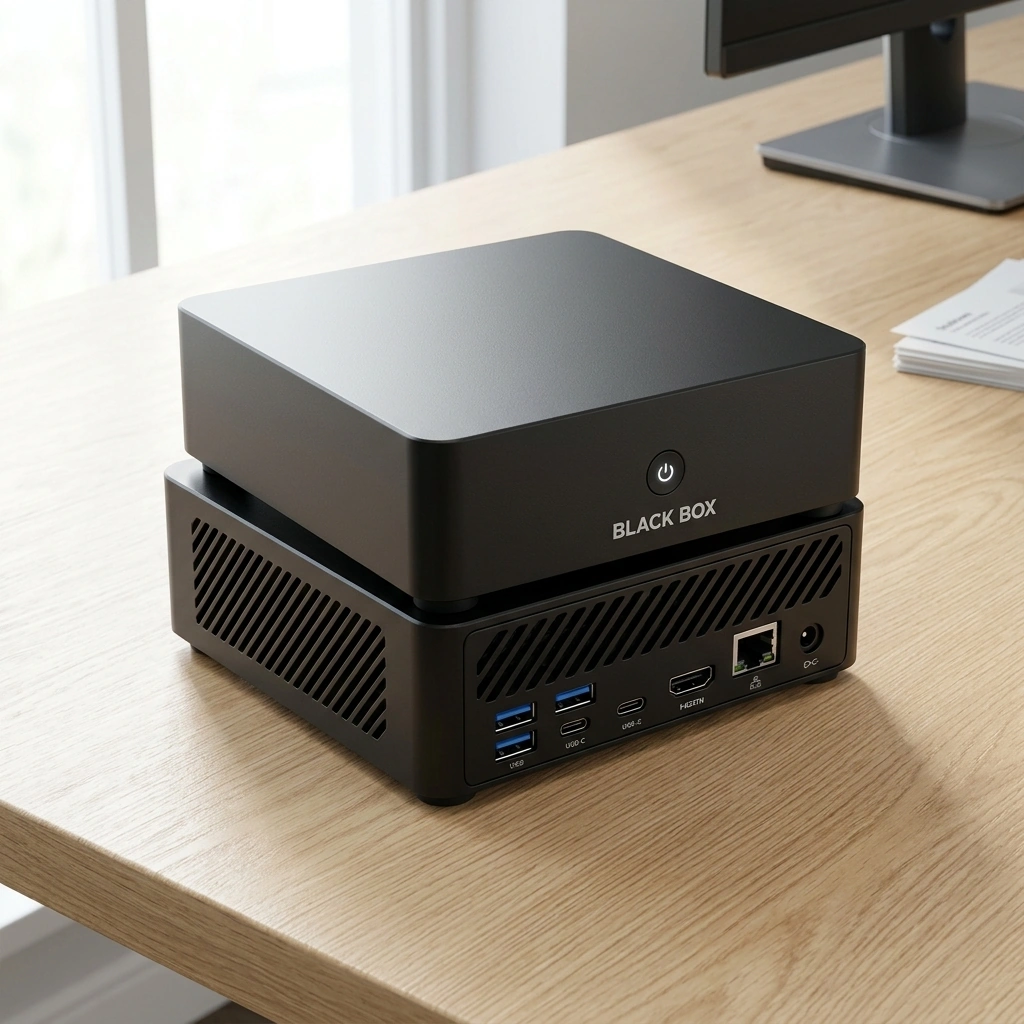

Local AI hardware processes data on the device, preventing sensitive client information from leaving the physical machine. This approach is critical for professionals bound by strict confidentiality agreements. This guide explains how local inference preserves privacy, details the hardware requirements for running large language models, and outlines the operational controls needed for secure document assistance. For additional details, review the https black boxai dough.
Confidentiality Preserving Inference
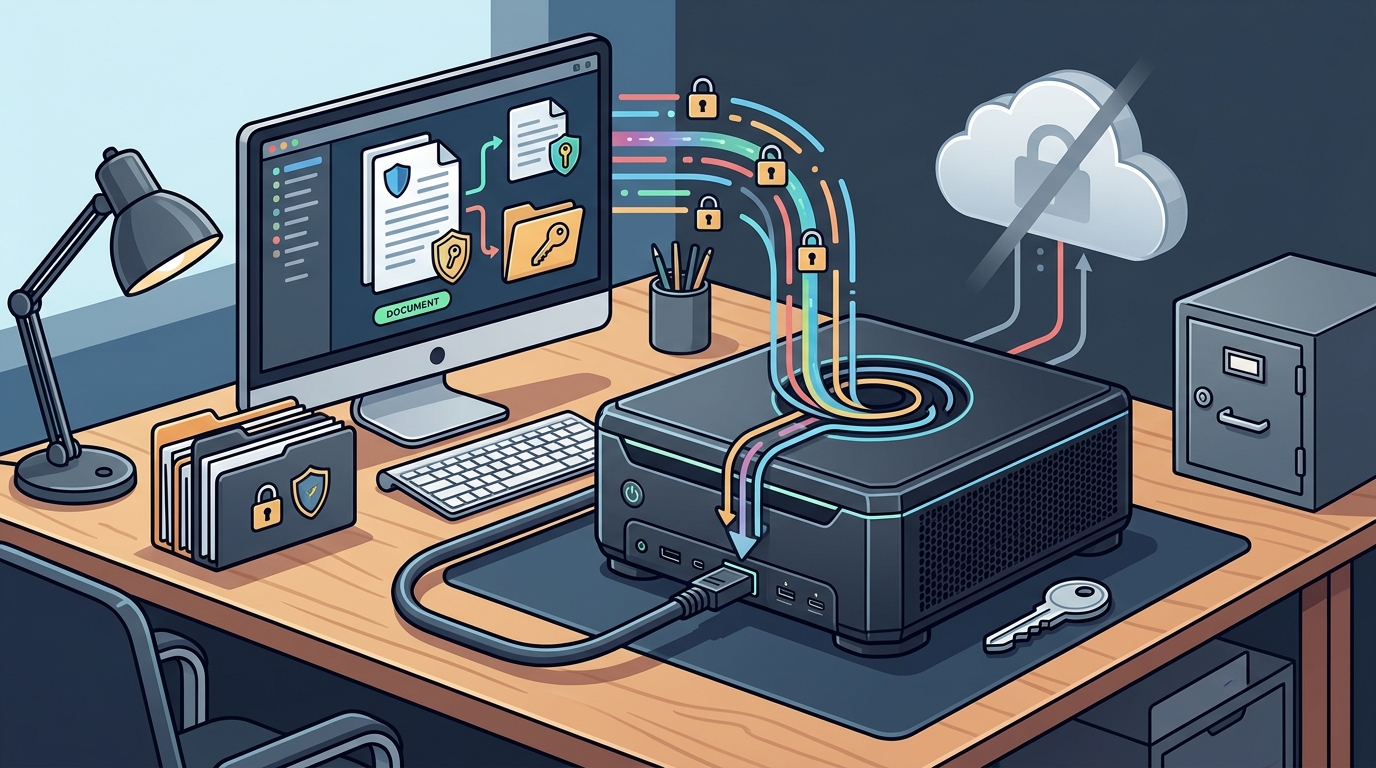
For professionals handling confidential client data, the primary risk is not just the model itself, but the infrastructure surrounding it. Cloud providers often require data to be processed in specific regions or through specific gateways. By keeping the processing local, the owner maintains physical and logical control over the data lifecycle. The data enters the device, is processed by the local model, and the output is generated on the same device. No intermediate server sees the raw client information. For additional details, review the .
It is important to distinguish between local processing and absolute security. Local processing by default, with owner-controlled permissions, is the standard for privacy-focused hardware. However, local processing does not guarantee complete security or regulatory compliance. If a user explicitly authorizes a cloud service or an external integration, data may be sent outside the device. The key is that this transmission is opt-in and controlled by the user, not forced by the platform architecture. For additional details, review the Customer Experience.
Hardware Requirements for Local Models
Running large language models locally requires significant computational resources. The two primary hardware components that determine performance are Random Access Memory (RAM) and the Central Processing Unit (CPU) or Graphics Processing Unit (GPU). RAM is the bottleneck for most local AI tasks. A model must be loaded into memory before it can process any input. If the model size exceeds the available RAM, the system will either fail to load the model or will use slower disk-based swapping, which drastically reduces usability. For additional details, review the Frequently Asked Questions.
Memory Capacity and Model Size
Model size is typically measured in parameters. A 7-billion parameter model requires approximately 14 GB of RAM when quantized to 4-bit precision. A 70-billion parameter model requires significantly more, often exceeding 40 GB of RAM even with aggressive quantization. For professionals who need to run larger, more capable models for complex document analysis, 64 GB of RAM is a practical minimum. This capacity allows for the loading of large models while leaving headroom for the operating system and other applications. For additional details, review the About.
Processing Power and Latency
Storage Speed and Capacity
Storage speed affects how quickly models can be loaded from disk into RAM. A high-speed Solid State Drive (SSD) is essential for a smooth user experience. A 4 TB SSD provides ample space for storing multiple model variants, large document repositories, and the operating system. This capacity ensures that users can switch between different models for different tasks without needing to delete or re-download files.
Operational Controls and Permissions
Hardware alone is not enough to ensure confidentiality. The operating system and software layer must provide granular controls over how the AI interacts with data. Overwatch OS is designed to give owners control over their data, memory, and agent permissions. This means that users can define which files the AI can access, which agents can run, and whether conversation memory is retained.
Agent Permissions and Sandboxing
Conversation Memory and Data Retention
Open Source Transparency
Hardware Comparison for Local AI
The following table compares key hardware specifications for local AI appliances. These specifications are critical for determining which models can be run and how quickly they can process data.
| Component | Minimum for 7B Models | Recommended for 70B Models | Black Box Specification |
|---|---|---|---|
| RAM | 16 GB | 64 GB | 64 GB |
| Storage | 512 GB SSD | 2 TB SSD | 4 TB SSD |
| Processor | 8-core CPU | High-performance CPU with NPU | AMD Ryzen AI 9 HX 370 |
| Graphics | Integrated GPU | High-performance Integrated or Discrete GPU | Radeon 890M |
Key Takeaways
- Local AI hardware processes data on the device, preventing sensitive client information from leaving the physical machine.
- Confidentiality preserving inference is the execution of AI models on local hardware where data does not transit over external networks.
- 64 GB of RAM is a practical minimum for running large, capable models for complex document analysis.
- Overwatch OS provides granular controls over agent permissions, conversation memory, and data retention.
- Local processing by default, with owner-controlled permissions, is the standard for privacy-focused hardware.
- Open-source transparency allows for independent auditing of the operating system, though availability is planned.
- Document assistance is a tool supporting human review, not a substitute for professional legal, medical, or financial advice.
Frequently Asked Questions
Does local AI hardware guarantee complete security?
No. Local processing does not guarantee complete security or regulatory compliance. It reduces the risk of data transmission to third parties, but users must still manage physical security and software permissions.
Can I use cloud services with Black Box?
Yes. Optional cloud services and integrations may send data outside the device with your authorization. These services may carry separate fees. You have full control over whether to enable these features.
Is Overwatch OS already open source?
No. Overwatch OS is planned to be open-source software, but it has not yet been released. The code is not currently available for public audit.
What is the minimum RAM required for local AI?
The minimum RAM depends on the model size. For 7-billion parameter models, 16 GB is sufficient. For 70-billion parameter models, 64 GB is recommended.
Can Black Box run any AI model?
Black Box is designed to run supported AI models locally. Compatibility with every model is not guaranteed. Users should check the supported model list before purchasing.
Is document assistance a substitute for professional advice?
No. Document assistance is a tool supporting human review. It is not a substitute for professional legal, medical, or financial advice. AI outputs may be inaccurate and should be reviewed before use. Learn more: https black boxai dough.