ChatGPT and Claude Subscription Pricing
Cloud-based AI services operate on a subscription model where users pay a recurring fee for access to hosted models. This pricing structure makes the initial barrier to entry very low, often starting at just a few dollars per month. However, costs scale rapidly as users require higher usage limits, advanced reasoning capabilities, or enterprise-grade features. For additional details, review the Frequently Asked Questions.
Standard and Pro Tiers
Enterprise and High-Usage Tiers
Local AI Hardware and Appliance Costs
Pre-Configured AI Appliances
Custom Builds and DIY Servers
Total Cost of Ownership Analysis
Break-Even Analysis
Electricity and Maintenance
Privacy, Data Control, and Operational Differences
The most significant non-monetary difference between local and cloud AI is data sovereignty. Local processing by default, with owner-controlled permissions, ensures that sensitive documents, code, and personal data never leave the physical device. This is a critical consideration for legal professionals, healthcare workers, and businesses handling proprietary information. For additional details, review the About.
Data Residency and Security
When using cloud services, data is transmitted to external servers for processing. Even with strong encryption in transit, the provider has technical access to the data. Local AI keeps supported AI processing on the device, giving owners direct control over their data, memory, and agent permissions. This architecture is particularly valuable for users who cannot share confidential information with third-party vendors due to client confidentiality agreements or internal security policies.
Connectivity and Availability
Cloud AI requires a stable internet connection to function. If the internet goes down, or if the provider experiences a service outage, the AI is inaccessible. Local AI servers operate independently of internet connectivity for core inference tasks. This ensures that critical workflows, such as drafting documents or analyzing local files, can continue uninterrupted during network failures. The Black Box is designed to arrive ready to use, providing immediate access to local models without waiting for cloud authentication or bandwidth availability.
Key Takeaways
- Local processing by default, with owner-controlled permissions, offers superior data privacy compared to cloud-based services.
- Local servers operate independently of internet connectivity, ensuring availability during network outages.
- Custom builds offer flexibility but require technical expertise, whereas pre-configured appliances provide a plug-and-play experience.
- For businesses with multiple users, local infrastructure often becomes more cost-effective than individual cloud subscriptions within the first year.
Frequently Asked Questions
Is a local AI server cheaper than ChatGPT Plus?
What hardware do I need to run local AI models?
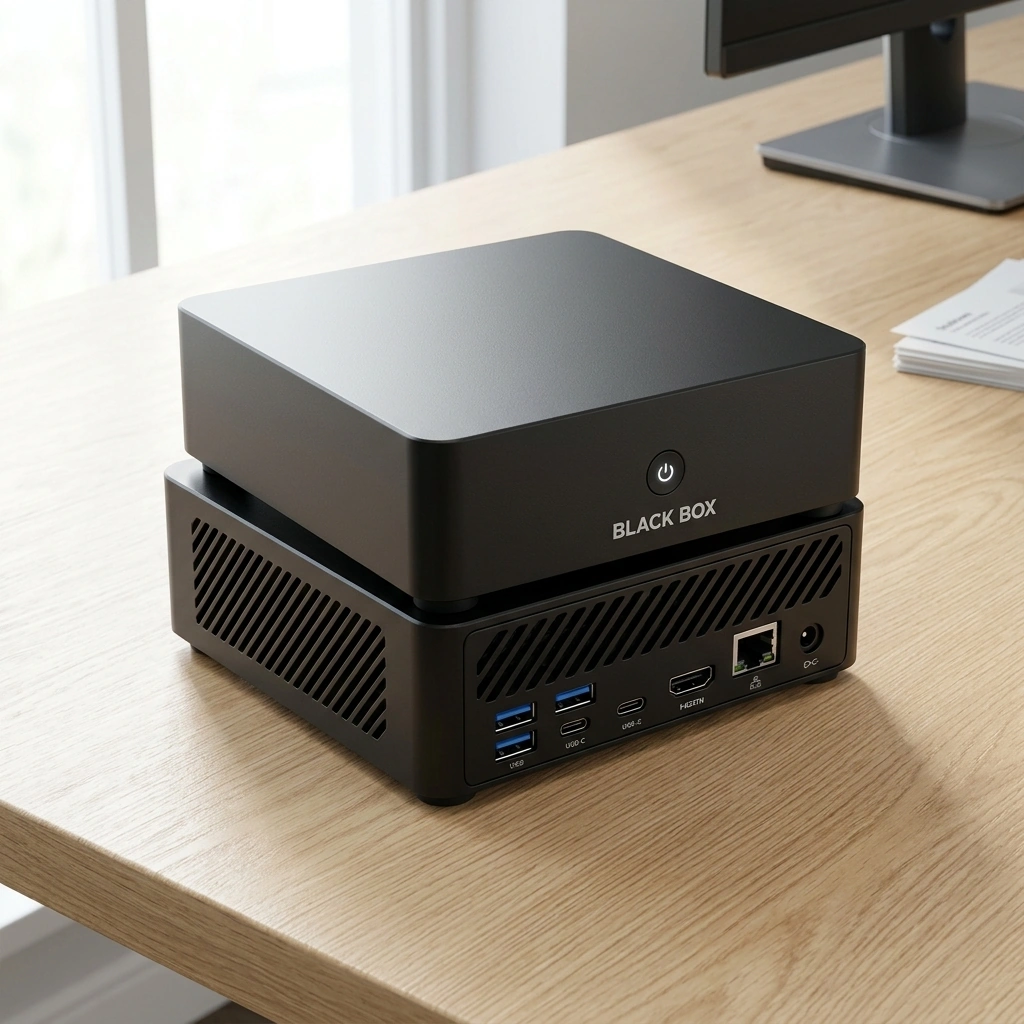
You need a computer with a powerful CPU or GPU, at least 32 GB of RAM, and fast NVMe storage. Pre-configured appliances like the Black Box come with 64 GB of RAM and a 4 TB SSD, pre-tuned for local model performance.
Does local AI require an internet connection?
No, local AI models run entirely on the device. You can use the AI for document assistance and agent tasks without an internet connection, although some optional integrations may require connectivity.
How does local AI handle privacy compared to cloud services?
Local AI keeps data on your device, meaning it is not sent to external servers. This provides local processing by default, with owner-controlled permissions, which is ideal for sensitive or confidential information.
Can I use local AI for business purposes?
Yes, local AI is well-suited for small businesses that need to protect client data. It eliminates per-seat subscription costs and ensures that proprietary business information remains on-premises.
What is the lifespan of a local AI server?
Hardware components typically last 5 to 10 years. While AI models evolve, the hardware can often be updated with new software or models, extending the useful life of the investment significantly beyond the subscription period.
Is Overwatch OS open source?
Overwatch OS is planned to be open-source software available for the Black Box domain. This allows for transparency and community-driven improvements, though specific release timelines and licensing details for individual models may vary. Learn more: Black Box Desktop AI.