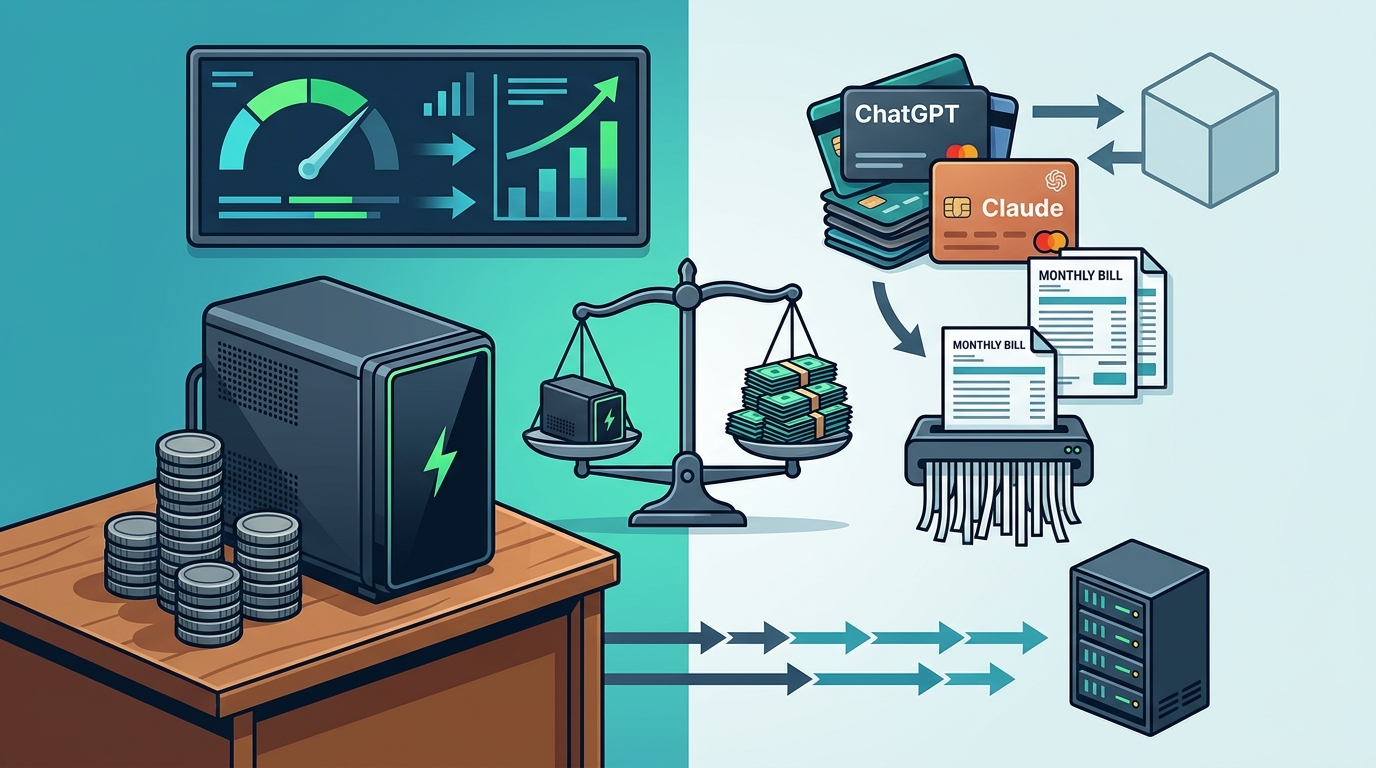
Local AI server cost is a one-time hardware investment that eliminates recurring subscription fees, whereas ChatGPT and Claude subscriptions are monthly recurring costs. This guide compares the upfront price of a local AI appliance like Black Box against the ongoing expense of premium AI subscriptions. It covers hardware specifications, subscription tiers, total cost of ownership, and data control considerations for individuals and small businesses.
ChatGPT and Claude Subscription Pricing
ChatGPT and Claude are leading cloud-based AI services that operate on a subscription model. Users pay a monthly fee to access advanced language models hosted on remote servers. The cost structure is predictable but recurring, meaning expenses accumulate indefinitely as long as the service is used. For additional details, review the .
ChatGPT Pricing Tiers
Claude Pricing Tiers
Both services require a stable internet connection to function. Data sent to these services is processed on remote servers, which raises considerations regarding data privacy and control. Users must trust the service provider with their prompts and outputs, as the data leaves their local environment. For additional details, review the Customer Experience.
Local AI Hardware Cost Breakdown
A local AI server is a dedicated hardware device that runs AI models on-premises. This approach requires an upfront capital expenditure but eliminates monthly subscription fees. The cost of a local AI server depends on the hardware specifications, particularly the processor, memory, and storage capacity. For additional details, review the Frequently Asked Questions.
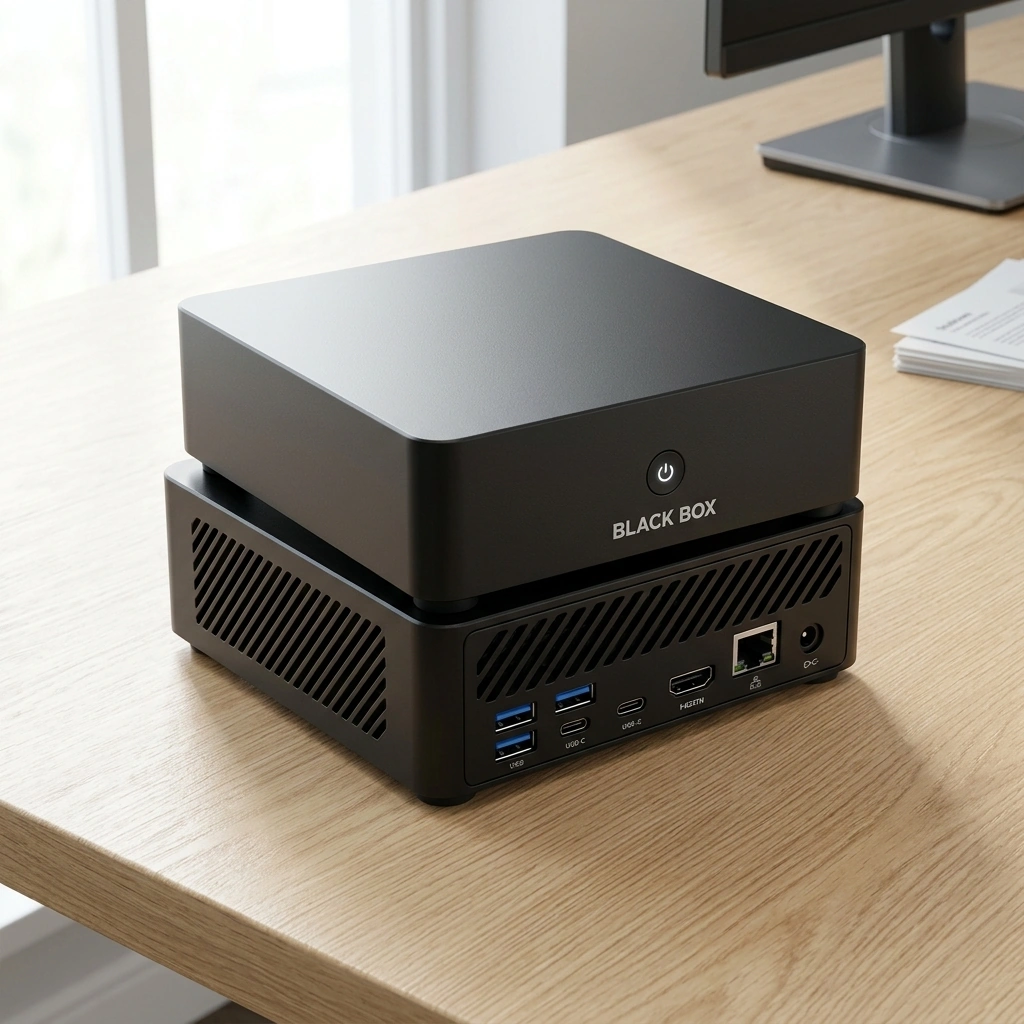
Black Box Appliance Specifications
The hardware in Black Box is comparable to high-end laptops or mini PCs. The 64 GB of RAM allows for the loading of larger models that require significant memory. The 4 TB SSD provides ample storage for models, documents, and user data. The integrated graphics card accelerates AI inference tasks, improving performance for complex workloads. For additional details, review the About.
DIY Local AI Server Options
Total Cost of Ownership Analysis
Total cost of ownership (TCO) is the sum of all costs associated with acquiring, operating, and maintaining a technology solution over its useful life. Comparing the TCO of a local AI server against cloud subscriptions reveals significant differences in long-term expenses.
One-Year Cost Comparison
Three-Year Cost Comparison
It is important to note that the local AI server provides a one-time purchase that can be used for multiple AI tasks, including document assistance, customizable agents, and conversation memory. The subscription service provides access to a specific set of models and features. The value proposition depends on the user's specific needs and usage patterns.
Data Control and Privacy Considerations
Data control is a critical factor when choosing between local and cloud AI. Local processing by default, with owner-controlled permissions, is a key advantage of local AI appliances. Users retain full control over their data, as it does not leave the device. This is particularly important for individuals and small businesses handling sensitive information.
Cloud AI Data Handling
Cloud AI services process data on remote servers. Users must trust the service provider with their data, as it is transmitted over the internet and stored on the provider's infrastructure. While major providers have privacy policies and security measures, users have limited control over how their data is used, stored, or shared. Data may be used for model training or other purposes, depending on the provider's terms of service.
Local AI Data Handling
Local AI appliances process data on the device. Data does not leave the local environment unless the user explicitly authorizes cloud services or external integrations. This provides a higher degree of privacy and control. Users can manage agent permissions and memory settings to ensure that only authorized data is processed. Local processing does not guarantee complete security or regulatory compliance, but it reduces the attack surface and data exposure risk.
Black Box is designed to keep supported AI processing on the device. Optional cloud services and integrations may send data outside the device with user authorization and may carry separate fees. Users should review the terms of service for any cloud integrations to understand how their data is handled.
Cost Comparison Table
| Factor | Local AI Server (Black Box) | ChatGPT Plus | Claude Pro |
|---|---|---|---|
| Data Control | Local processing by default | Cloud processing | Cloud processing |
| Internet Required | No (for local tasks) | Yes | Yes |
| Scalability | Limited by hardware | High (cloud-based) | High (cloud-based) |
Key Takeaways
- Local AI server cost is a one-time hardware investment, while ChatGPT and Claude subscriptions are recurring monthly expenses.
- Total cost of ownership for a local AI server becomes competitive with subscriptions over a 5-year period.
- Cloud AI services require a stable internet connection and process data on remote servers.
- Local AI hardware requires electricity, adding a small monthly cost to the total expense.
- Users should consider their specific needs, usage patterns, and data sensitivity when choosing between local and cloud AI.
Frequently Asked Questions
How much does a local AI server cost?
Is a local AI server cheaper than ChatGPT or Claude?
What are the advantages of a local AI server?
What are the disadvantages of a local AI server?
Local AI servers require a significant upfront investment and may have limited scalability compared to cloud services. They also require electricity to operate, adding a small monthly cost.
Does Black Box require a subscription?
Black Box is a hardware appliance that runs local AI models. It does not require a subscription for local processing. Optional cloud services and integrations may carry separate fees.
Can I use Black Box without an internet connection?
Yes, Black Box is designed to run supported AI tasks locally. You can use it for document assistance, customizable agents, and conversation memory without an internet connection.
How does data privacy work with local AI?
Local AI processes data on the device, keeping it within your local environment. Data does not leave the device unless you explicitly authorize cloud services or external integrations. Learn more: Black Box Desktop AI.